If it feels less like a steady tide of law change and more like a tsunami, you’re not imagining it!
We’ve dug into what’s been happening
Looking at the first 18 months of the last three governments, as well as trends in the lead-up to elections, the data confirms that we’re seeing more laws made faster, with less time to prepare.

Laws are being made more quickly
Governments are increasingly using urgency to progress legislation. Urgency lets Parliament sit longer and move a Bill through multiple stages (sometimes all stages) in a single day.
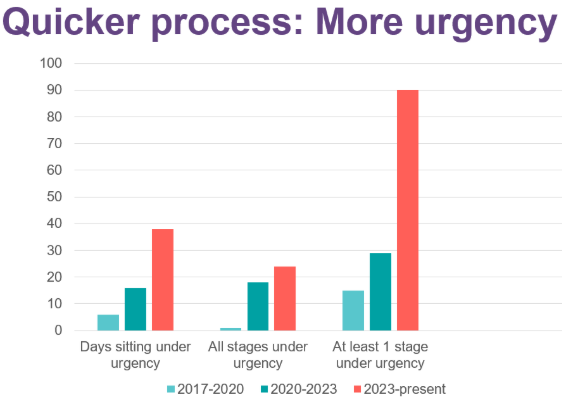
Looking at the first 18 months of the last three governments, we saw a rise in the number of days the House sits under urgency, an increase in the number of Bills passed entirely under urgency, and a jump in Bills where at least one stage was passed under urgency.
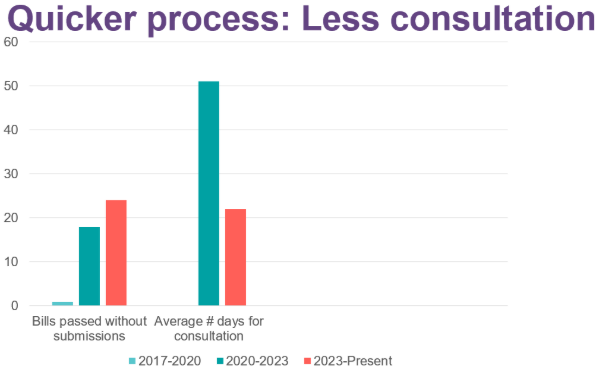
We also identified a reduction in the amount of consultation.
More Bills are being passed without a select committee process, and where there is a select committee process, the average submission window has dropped from around 51 days to 22 days.
Big changes in force quicker
We’ve noticed that recent large and complex regulatory changes have come into force immediately or with a shorter transition period.
The recent Local Government (Water Services) Act created over 120 new obligations for local authorities and water organisations, and it took effect the day after Royal Assent.
The two new laws that will replace the Resource Management Act next year are set to be fully operational by 2029. In contrast, the previous government’s resource management reforms were intended to roll out over a decade.
Change ramps up before an election
Looking back over the last three electoral cycles, we generally saw a steady build-up of new laws across a government’s term, with activity peaking in the final 12 months before an election.
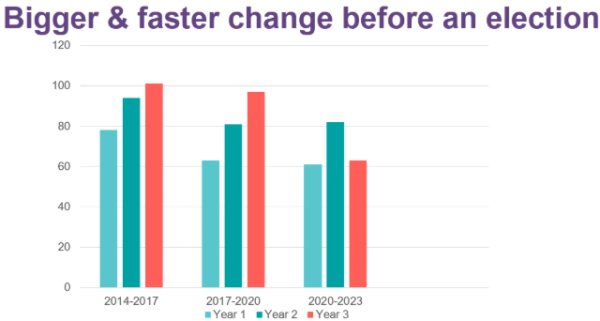
The 2023 election year bucked this trend by number, but that year saw large and fundamental changes, including two Acts to replace the Resource Management Act, the Fair Pay Agreements Act, and the Water Services Entities Act. All three of these Acts have now been repealed.
How ComplyWith can help

In this environment, it’s challenging to stay on top of your obligations, let alone anticipate what’s coming next.
Our dedicated Content Team is continuously monitoring and updating your Obligations Register as close to real time as possible. Your Obligations Register identifies what’s changed and when, and law change notifications keep your people up to date as the law changes.
Our ComplyWatch tool enables early visibility of upcoming changes so you can make submissions and maximise your time to prepare.
If you’d like to know more about ComplyWatch or how we can support your organisation through the next wave of law change, please get in touch.
