Legal compliance has never been a set-and-forget function. But in 2026, the stakes feel different - and for good reason.
The pace of law change in New Zealand has accelerated significantly. Organisations operating across regulated sectors have seen 50 or more pieces of legislation affecting their operations change in a single year. Health and safety obligations, environmental rules, privacy law and employment law are all changing at an unprecedented pace.
Meanwhile, expectations of leaders around ensuring compliance with the law are rising. Governance, chief executives and other senior officers carry personal legal duties to exercise due diligence over their organisation’s compliance and in areas like health and safety - duties that courts are increasingly willing to enforce. The recent appeal upholding the conviction of the former Chief Executive of the Port of Auckland (Gibson v Maritime NZ) is a sobering reminder that compliance failures can have a tragic human toll and serious personal consequences for individuals at the top of an organisation.
Against this backdrop, good governance and risk management now demands that organisations treat legal compliance not as a back-office checklist, but as a core management function - with the systems and rigour to match.
Why it matters beyond the obvious
Good legal compliance isn’t just about avoiding prosecution or passing an audit. Organisations that manage their legal obligations well are better placed to make sound decisions, because decision-makers understand the constraints they’re operating within. They build greater trust with regulators, communities, and stakeholders. They develop a culture where doing things properly is the norm, not the exception.
And when things do go wrong - as they sometimes will - organisations with robust compliance programmes are in a materially better position. Courts and regulators consistently treat the existence of a genuine compliance programme as important mitigating evidence. The absence of one can make a difficult situation significantly worse.
The question for leadership isn’t really whether your organisation can afford to take legal compliance seriously. In 2026, it’s whether you can afford not to.

What does good legal compliance actually look like in 2026?
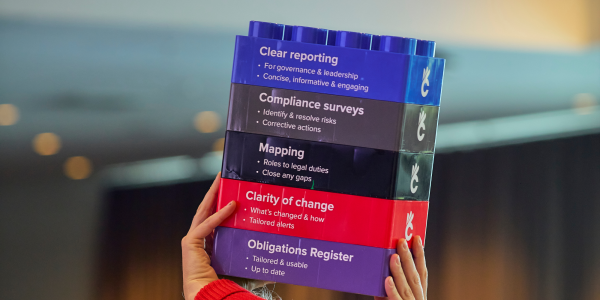
International management standards have converged on a consistent model. ISO 37301 (compliance management), ISO 45001 (health and safety), and ISO 14001 (environmental management) all point to the same essential elements. Here’s what good looks like in practice.
A complete and accessible record of your organisation’s legal obligations
Good compliance starts with knowing what the law actually requires of your organisation - across every piece of legislation that materially applies to you.
This means more than just having access to legislation.govt.nz. It means having a curated, maintained register of your material obligations, written in plain language that non-lawyers can understand and act on. For many organisations, this register will span over one hundred Acts and regulations.
A system for keeping your organisation up to date with law changes
A compliance obligations register that reflects last year’s law could be worse than useless - it creates false confidence. Good practice requires a systematic process for tracking law changes, updating obligations in real time, and proactively alerting the people in the organisation whose responsibilities are affected.
Clear accountability mapped to roles
Knowing what the law requires is only half the battle. Good compliance programmes map material legal obligations to the people responsible for ensuring your organisation complies with them, so there are no gaps and no ambiguity about who is responsible for what. This mapping needs to stay current as both the law and your organisation evolve.
Meaningful monitoring - not blind attestations
The weakest form of compliance monitoring is asking people to broadly confirm they’re compliant. This approach rarely surfaces real risks and does not hold up well under regulatory scrutiny.
Good practice means monitoring against clear and specific legal requirements - and tracking non-compliances through to resolution with a clear and robust corrective actions process.
Reporting that gives leadership genuine assurance
Boards, audit committees, and chief executives need to know the truth about their organisation’s compliance posture - not a sanitised summary.
Good compliance reporting draws directly from monitoring data, highlights material risks and unresolved issues, and gives leadership the information they need to fulfil their own oversight duties.